
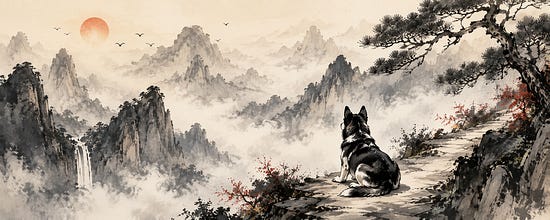
松花江的一刻 — Before Rascal — Intermediate
Includes Excerpts from the book: The Four Seasons of Rascal: The Dog From Harbin

In 2006, I visited a dog market in Harbin, China, with the intention of buying a puppy. What I didn’t know was that the small decision I was about to make would shape the next thirteen and a half years of my life.
This reading tells the story of a moment that took place before I brought Rascal home. While standing beside the Songhua River with my two best friends in Harbin, I found myself reflecting on the quiet power of nature and the concept of 道 (Dao). At the time, it seemed like an ordinary pause in an ordinary day. Looking back, it feels like the last quiet moment before a new chapter of life began.
The story below is adapted from my original Chinese writing and includes excerpts and themes from my memoir, The Four Seasons of Rascal: The Dog from Harbin.
As you read, pay attention to how the river, the conversation, and the decision to return to the dog vendor all come together in a single moment—one that would eventually lead to a journey spanning two countries, four states, seven cities, and thirteen and a half unforgettable years.
— Todd
📌 Note for Learners:
If you’re new to reading Chinese, don’t worry! The version below is in full Chinese characters.
✨ Just scroll down to find the instructor version—with pinyin, vocabulary, and audio to guide you step by step.
松花江边的一刻
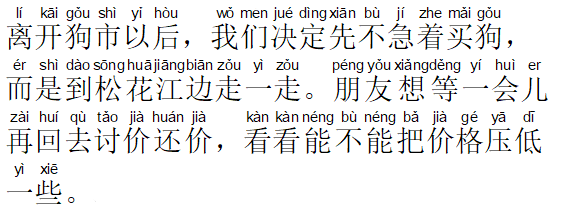
离开狗市以后,我们决定先不急着买狗,而是到松花江边走一走。朋友想等一会儿再回去讨价还价,看看能不能把价格压低一些。
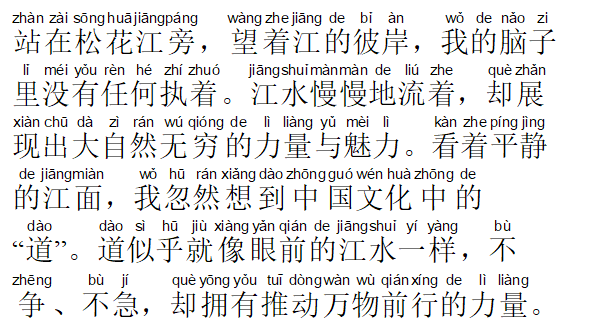
站在松花江旁,望着江的彼岸,我的脑子里没有任何执着。江水慢慢地流着,却展现出大自然无穷的力量与魅力。看着平静的江面,我忽然想到中国文化中的“道”。道似乎就像眼前的江水一样,不争、不急,却拥有推动万物前行的力量。
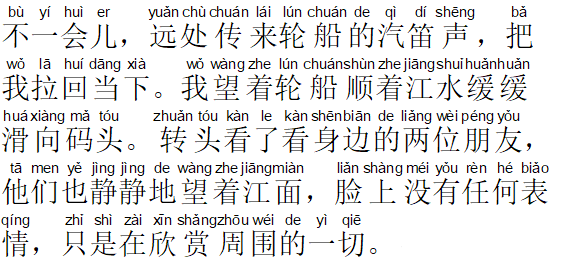
不一会儿,远处传来轮船的汽笛声,把我拉回当下。我望着轮船顺着江水缓缓滑向码头。转头看了看身边的两位朋友,他们也静静地望着江面,脸上没有任何表情,只是在欣赏周围的一切。
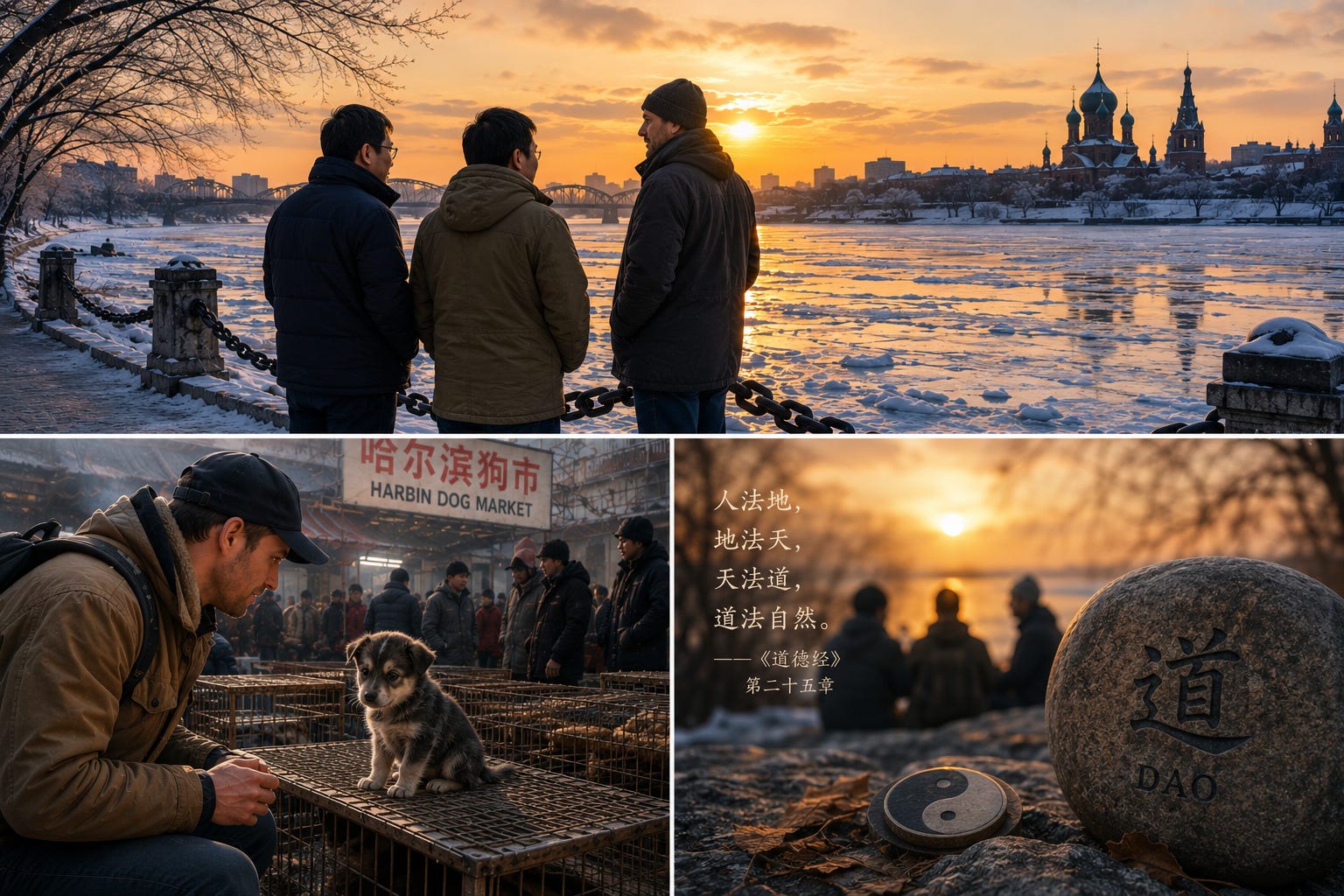
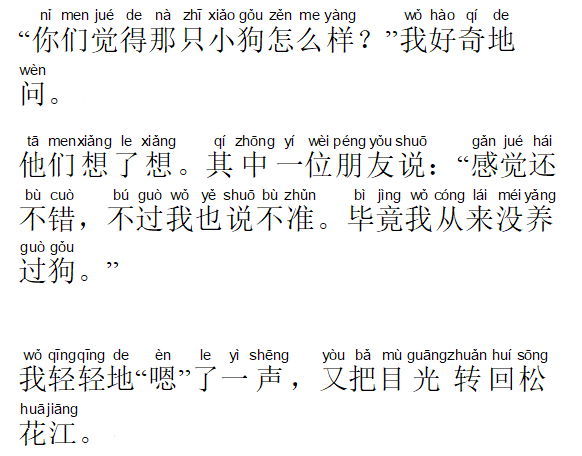
“你们觉得那只小狗怎么样?”我好奇地问。
他们想了想。其中一位朋友说:“感觉还不错,不过我也说不准。毕竟我从来没养过狗。”
我轻轻地“嗯”了一声,又把目光转回松花江。
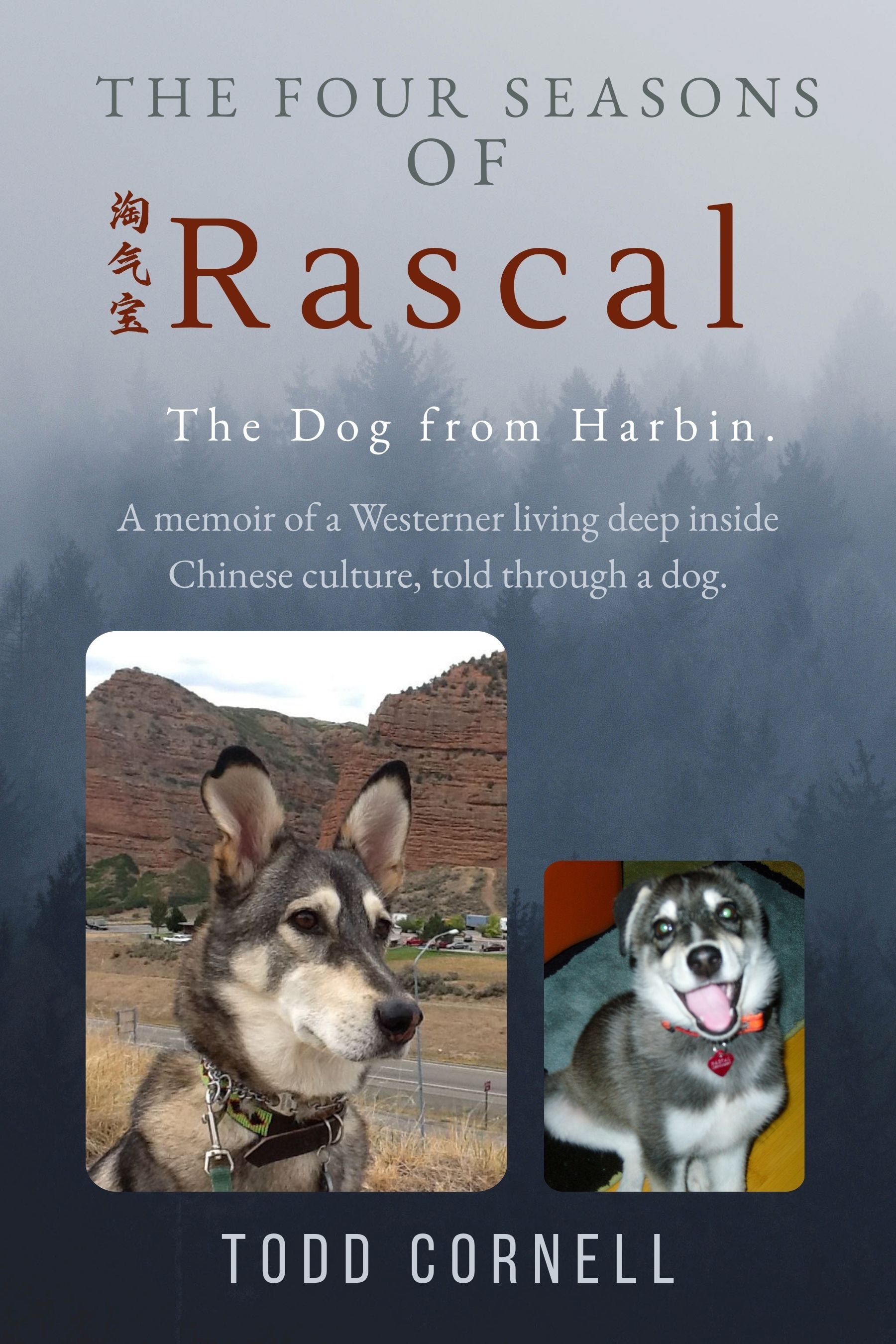
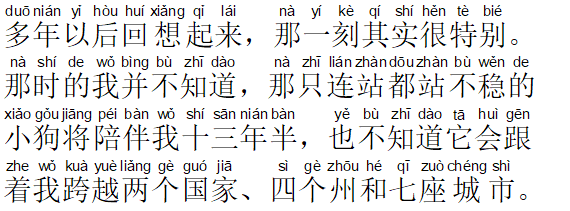
多年以后回想起来,那一刻其实很特别。那时的我并不知道,那只连站都站不稳的小狗将陪伴我十三年半,也不知道它会跟着我跨越两个国家、四个州和七座城市。
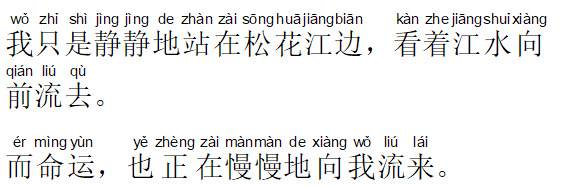
我只是静静地站在松花江边,看着江水向前流去。
而命运,也正在慢慢地向我流来。
Download the PDF file HERE.
These PDFs are designed to help you immerse yourself fully in the language, focusing on reading and comprehension without Pinyin or vocabulary lists. And they include both simplified and traditional character versions. You can download, print them out, and use them for study and review at your own pace.
📖 本故事改编自《淘气宝四季》里的中文短篇故事。
This reading is adapted from an original Chinese short story featured in The Four Seasons of Rascal: The Dog from Harbin, published by Cultur668 Publishing.
松花江 (sōng huā jiāng) Songhua River
边 (biān) side; bank; edge
一刻 (yí kè) a moment
狗市 (gǒu shì) dog market
决定 (jué dìng) to decide
急着 (jí zhe) to be in a hurry to
讨价还价 (tǎo jià huán jià) to bargain; to haggle
价格 (jià gé) price
压低 (yā dī) to lower; to drive down
一些 (yì xiē) a bit; somewhat
💡 讨价还价 is a wonderful expression for bargaining in markets. Literally, “quote a price and return a price,” describing the back-and-forth negotiation process.
Book excerpt: Page 97: Return to the Pups
As we walked toward the end of the street, we drew nearer to the Songhua River Walk.
The River Walk was a picturesque, park-like pedestrian walk along the Songhua River. It started in the south, near the Shangri-La Hotel, and stretched all the way north to 道外 — Dao Wai, where we found ourselves then.
As we neared the River Walk, there were more fish. The Chinese love to raise fish almost as much as they like to eat them.
Click here to read more.
站 (zhàn) to stand
旁 (páng) beside; next to
彼岸 (bǐ àn) the opposite shore; the far bank
脑子 (nǎo zi) mind; brain
任何 (rèn hé) any
执着 (zhí zhuó) worries, attachment; fixation
江水 (jiāng shuǐ) river water
慢慢地 (màn màn de) slowly
流 (liú) to flow
展现 (zhǎn xiàn) to display; to reveal
大自然 (dà zì rán) nature
无穷 (wú qióng) endless; infinite
力量 (lì liang) power; strength
魅力 (mèi lì) charm; appeal
平静 (píng jìng) calm; tranquil
江面 (jiāng miàn) river surface
忽然 (hū rán) suddenly
想到 (xiǎng dào) to think of; to occur to
文化 (wén huà) culture
道 (dào) the Dao; the Way
似乎 (sì hū) to seem; as if
眼前 (yǎn qián) before one's eyes
不争 (bù zhēng) not to contend; not to compete
推动 (tuī dòng) to propel; to drive forward
万物 (wàn wù) all things; everything in existence
前行 (qián xíng) to move forward; to advance
💡 道 (dào) is one of the central concepts of Daoist thought. Depending on context, it may be translated as "the Way," "the Path," or the underlying principle that guides the natural unfolding of the universe. I prefer to call it simply 'Dao' — not 'the Dao' — because adding 'the' diminishes the universal omnipotence that 道 evokes.
不一会儿 (bù yí huìr) in a little while; before long
远处 (yuǎn chù) the distance; far away
传来 (chuán lái) to be heard; to come from afar
轮船 (lún chuán) ship; steamboat
汽笛声 (qì dí shēng) ship whistle; horn sound
拉回 (lā huí) to pull back
当下 (dāng xià) the present moment
顺着 (shùn zhe) along; following
缓缓 (huǎn huǎn) slowly; gradually
滑向 (huá xiàng) to glide toward
码头 (mǎ tóu) dock; wharf
转头 (zhuǎn tóu) to turn one's head
身边 (shēn biān) by one's side
静静地 (jìng jìng de) quietly
表情 (biǎo qíng) expression
欣赏 (xīn shǎng) to appreciate; to admire
周围 (zhōu wéi) surrounding; around
一切 (yí qiè) everything; all things
💡 当下 (dāng xià) is a beautiful word that appears often in Chinese philosophy, meditation, and modern mindfulness writing. It refers to the present moment — the here and now.
觉得 (jué de) to feel; to think
小狗 (xiǎo gǒu) puppy; little dog
怎么样 (zěn me yàng) how; what do you think
好奇 (hào qí) curious
想了想 (xiǎng le xiǎng) thought for a moment
其中 (qí zhōng) among; one of
感觉 (gǎn jué) feeling; impression
不错 (bú cuò) not bad; pretty good
不过 (bú guò) however
说不准 (shuō bù zhǔn) can't say for sure
毕竟 (bì jìng) after all
从来 (cóng lái) never; ever since
养 (yǎng) to raise; to keep (a pet)
轻轻地 (qīng qīng de) lightly; gently
目光 (mù guāng) gaze; look
转回 (zhuǎn huí) to turn back
💡 说不准 (shuō bù zhǔn) is a common conversational expression meaning "I can't really tell" or "it's hard to say," often used when someone lacks knowledge or certainty about a situation.
多年以后 (duō nián yǐ hòu) many years later
回想起来 (huí xiǎng qǐ lái) to look back on; to recall
其实 (qí shí) actually; in fact
特别 (tè bié) special
那时 (nà shí) at that time
并不知道 (bìng bù zhī dào) did not know at all
连 (lián) even
站不稳 (zhàn bù wěn) unable to stand steadily
陪伴 (péi bàn) to accompany; to be by someone's side
十三年半 (shí sān nián bàn) thirteen and a half years
跟着 (gēn zhe) to follow
跨越 (kuà yuè) to cross; to span
国家 (guó jiā) country
州 (zhōu) state; province
座 (zuò) measure word for cities, mountains, bridges, and other large fixed structures
城市 (chéng shì) city
Book excerpt: Page 104: The Arrival
The vendor picked up the tiny fuzzball and passed it to me. He seemed so fragile. I used both hands to take him, though he was small enough to fit in one.
Grey and white, with markings that suggested something wild in his lineage — something savage — belonging to open spaces and wintry days.
He was oblivious to everything — the noise of the market, the crowd pressing in around us, even other animals on tables nearby.
He just lay in my hand, head facing down, as if the world had not come into focus.
I crouched down and gently set him on his tiny feet, slowly letting go, not sure how he would react. Almost fearing he might disappear under some browsing feet.
But he just swayed.
Back and forth, unsteady on the asphalt. His four small legs trying to find their footing.
I put my hand under his belly to catch him before he went down. He pulled himself out of the head spin slowly, steadied — and then took two small steps.
This was the first time I caught him.
But not the last...
Click here to read more.
江边 (jiāng biān) riverside; riverbank
向前 (xiàng qián) forward
流去 (liú qù) to flow away; to flow onward
命运 (mìng yùn) fate; destiny
正在 (zhèng zài) in the process of; currently
💡 命运 (mìng yùn) means "fate" or "destiny," but in Chinese literature it often suggests the unfolding path of a life rather than a fixed predetermined outcome. In this passage, the flowing river becomes a metaphor for both time and the quiet arrival of a future not yet seen.
Book excerpt: Pages 107 - 110
I told the vendor I would take him.
I reached into the front right pocket of my jeans — where I’ve kept my wallet since a pick-pocketing at the Taipei train station in 1985 and still do — pulled out my wallet, opened it, and counted out six red one-hundred renminbi bills, each graced with a familiar portrait of Mao.
The vendor watched intently as I counted the bills — American-style, transferring each from my left hand to my right: one, two, three, four, five, six.
He took the bills and counted them Chinese-style, keeping them in his left hand and flipping each one with his right thumb: 一、二、三、四、五、六.
He nodded once. The money was correct.
I picked up my puppy. And he fit perfectly into the crook of my arm.
After months of back and forth, contemplation and cold feet — talking myself in and out of it — here he was. My canine companion. And I did not know where it would go from here.
I looked at Sean and Zhang. Smiles on both their faces, and questions in their eyes.
With the puppy tucked under my arm, I walked away from the table[.]
If you would like to read more of The Four Seasons of Rascal, please visit www.RascalTheBook.com or Click here.
Thanks for reading Mapping Mandarin™! I pour a lot of heart into these posts and love making them freely available to everyone. If you enjoy what I’m creating, please consider becoming a supporter to help keep it open and accessible—especially for those who might not otherwise afford it.
Even a yearly pledge, or just a month here and there, makes a real difference.
感谢你的支持!💛

Also, check out my other Substack: Heart Of China Journal!
And the Master Mandarin YouTube channel!
