

《‘咕咚‘ 来了!》“'Splash' is Coming!"
What set off the panic?

Have you ever witnessed a situation where a small misunderstanding led to a big commotion? How did it all start, and what was the outcome?
I invite you to read the captivating story "Splash is Coming." As you enjoy this delightful tale, reflect on the best ways to avoid such misunderstandings in real life. It's a wonderful opportunity to not only entertain yourself but also to improve your Chinese reading and comprehension skills.
Dive into the story and see how a simple sound can cause a hilarious chain reaction among a group of animals. What lessons can we learn from their experience?
《咕咚》
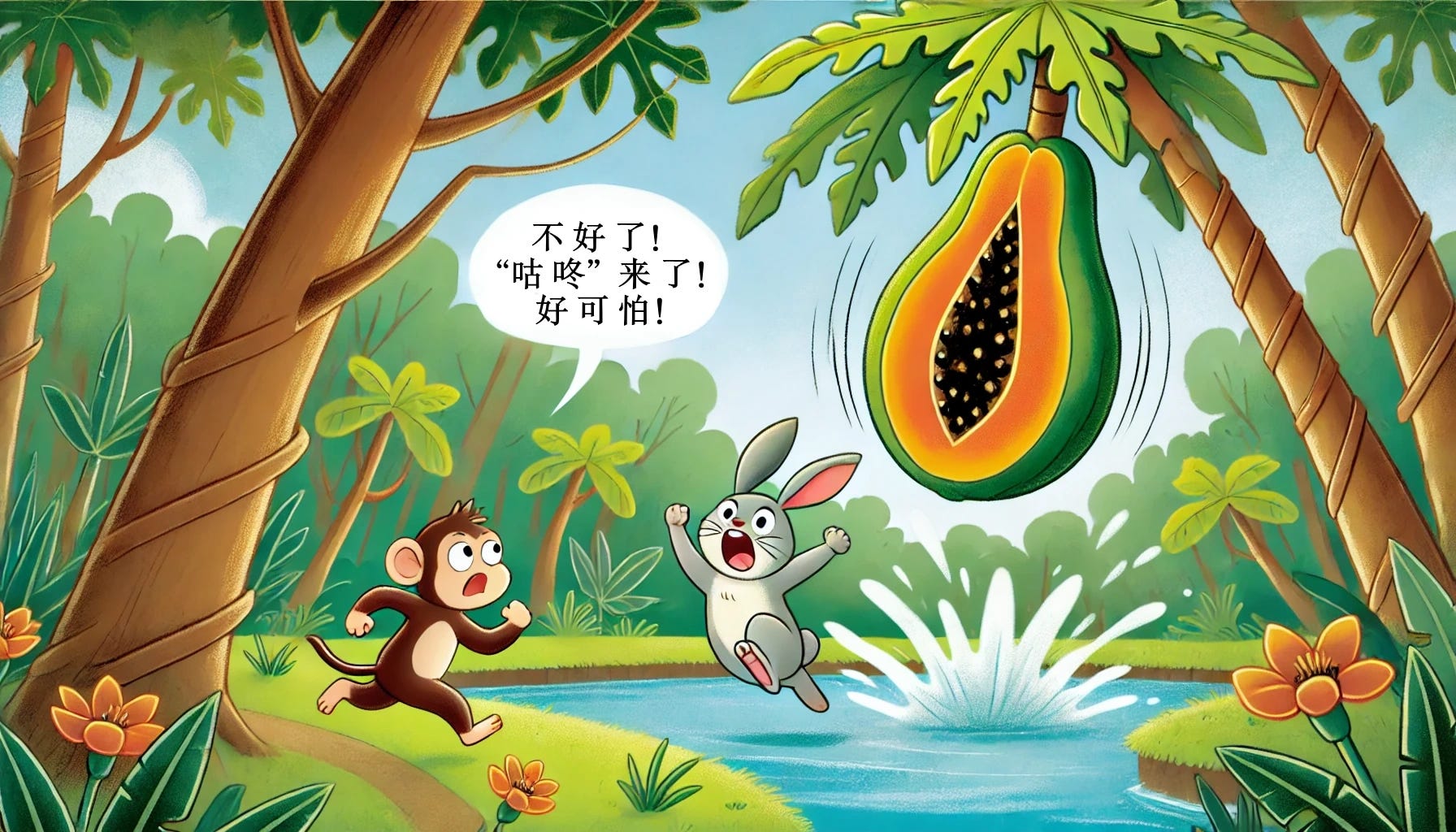
木瓜熟了。一个木瓜从高高的树上掉进湖里,咕咚!
兔子吓了一跳,拔腿就跑。小猴儿看见了,问他为什么跑。兔子一边跑一边叫;“不好了,‘咕咚’可怕极了!”
小猴儿一听,就跟着跑起来。他一边跑一边叫:“不好了,不好了,‘咕咚’来了,大家快跑哇!”
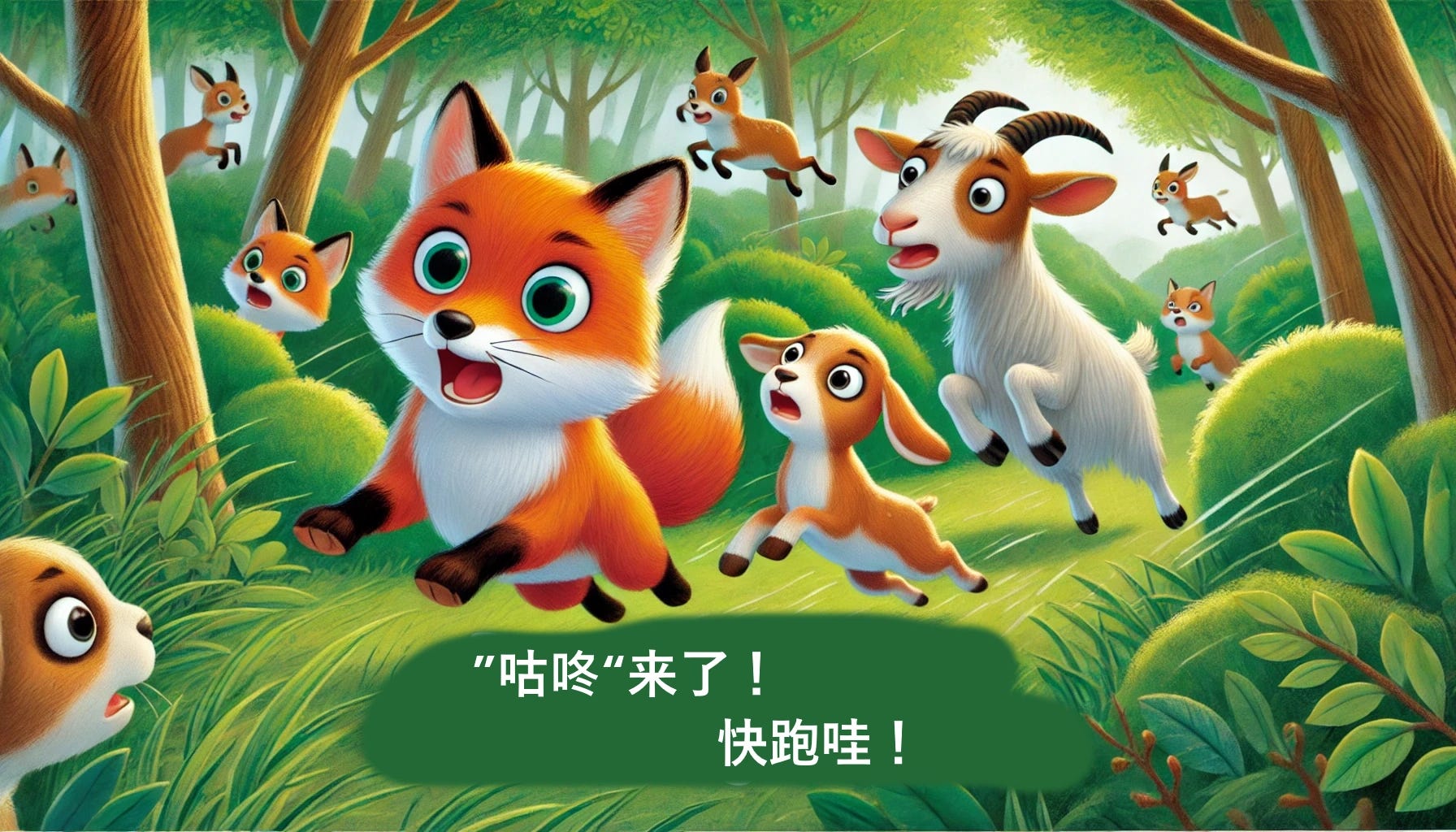
这一下可热闹了。狐狸呀,山羊啊,小鹿哇,一个跟着一个跑起来。大伙儿一边跑一边叫:“快逃命啊,‘咕咚’来了!”
大象看见了,也跟着跑起来。野牛拦住他,问:“‘咕咚’在哪里,你看见了?”大象说:“没看见,大伙儿都说‘咕咚’来了。”野牛拦住大伙儿问,大伙儿都说没看见。最后问兔子,兔子说:“是我听见的,‘咕咚’就在那边的湖里。”
兔子领着大家来到湖边。正好又有一个木瓜从高高的树上掉进湖里,咕咚!
大伙儿你看看我,我看看你,都笑了。
请注意:如果你是母语者,请通过Substack留言指出错别字或语法问题,以便保持帖子质量。
感谢合作!
Story breakdown by paragraph with vocabulary and audio
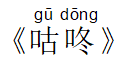
咕咚 = splash, splat(onomatopeia)

木瓜 = papaya(s)
熟 = to be ripe
掉进 = to fall into
湖 = lake
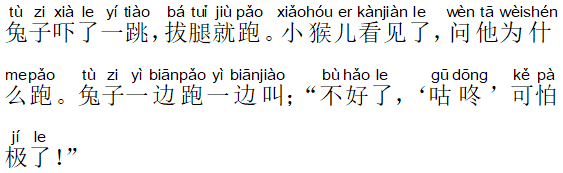
吓一跳 = to be scared to death, shocked
拔腿就跑 = to take off running
看见了 = saw it
一边跑一边叫 = ran while hollaring (一边 + verb 一边 + verb)
可怕 = frightening, frightful, scary
极了 = extremely
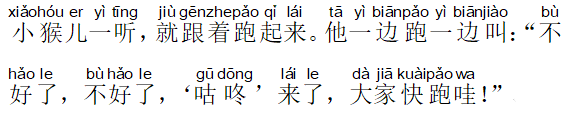
一听 = upon hearing [that]
跟着 = following
快跑 = hurry and run
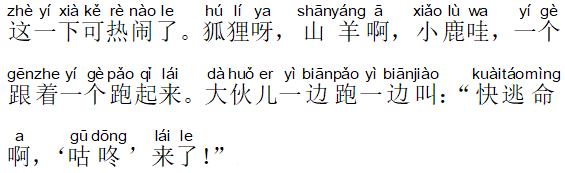
这一下 = this moment
热闹 = lively, bustling, clamor
一个跟着一个 = one following the other
Are you looking for personalized one-on-one tutoring to target your specific needs? As a highly qualified and experienced tutor, I will help you enhance your Mandarin skills, improve your Mandarin pronunciation, and clearly explain challenging grammar and native speech habits.
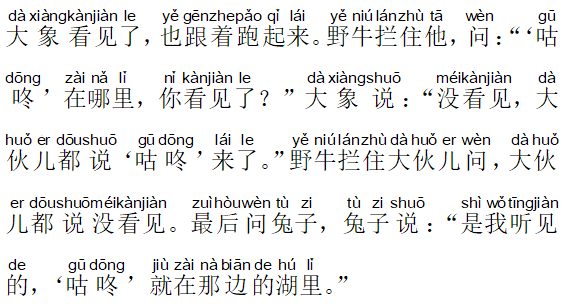
野牛 = bison
拦住 = to obstruct, stop
是我听见的 = it was me that heard it
Let’s take a closer look.
The translation shows the characters followed by English, arranged by meaning.
大象看见了 (the elephant saw it),也跟着跑起来 (and followed, taking off running)。野牛拦住他 (the bison obstructed his way),问 (and asked):“‘咕咚’在哪里 (where is 'splash’),你看见了 (did you see it)?”大象说 (the elephant said):“没看见 (I didn’t see it),大伙儿都说‘咕咚’来了 (everyone said ‘splash’ is coming)。”野牛拦住大伙儿问 (the bison stopped everyone and asked),大伙儿都说没看见 (everyone said they hadn’t seen it)。最后问兔子 (he asked rabbit last),兔子说 (rabbit said) :“是我听见的 (it was me that heard it),‘咕咚’就在那边的湖里 (‘splash’ is in the lake over there)。”
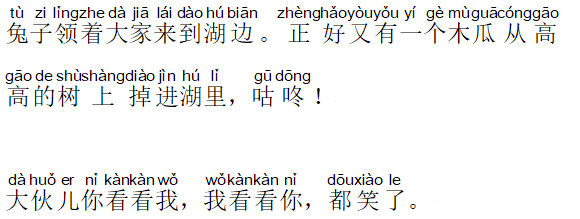
领 = to lead, guide
湖边 = the lakeside
你看我,我看你 = looking at each other
Character Radical:
口 = the "口 (kǒu)," or mouth radical is often associated with characters that have meanings related to the mouth, speech, or sounds. Learning characters with this radical can help learners understand the connections between the shapes of characters and their meanings, as well as improve their ability to recognize and remember these characters.
Below are some mouth radical characters from the story:
咕 (gū) - 咕咚 (gū dōng) - the sound of the papaya falling
吓 (xià) - 吓了一跳 (xià le yī tiào) - startled
问 (wèn) - 问他 (wèn tā) - to ask him
喊 (hǎn) - 喊叫 (hǎn jiào) - to shout
Yin-yang Character Groups:
Yin-yang character groups illustrate the balance and complementary nature of concepts in the Chinese language. Here are three pairs:
高低 (gāo dī) - high and low; height
大小 (dà xiǎo) - big and small, size
前后 (qián hòu) - front and back, surroundings
Thanks for reading Mapping Mandarin™! I love doing this and want to keep all posts free for everyone. Please consider pledging to help keep them free. A yearly pledge or even a month now and then would be a great help. 感谢!

Also, check out my other Substack: Heart Of China Journal!
And the Master Mandarin YouTube channel!
