

《马到成功的故事》- Intermediate
A story of the Chinese expression "Success Arrives With the Horse"

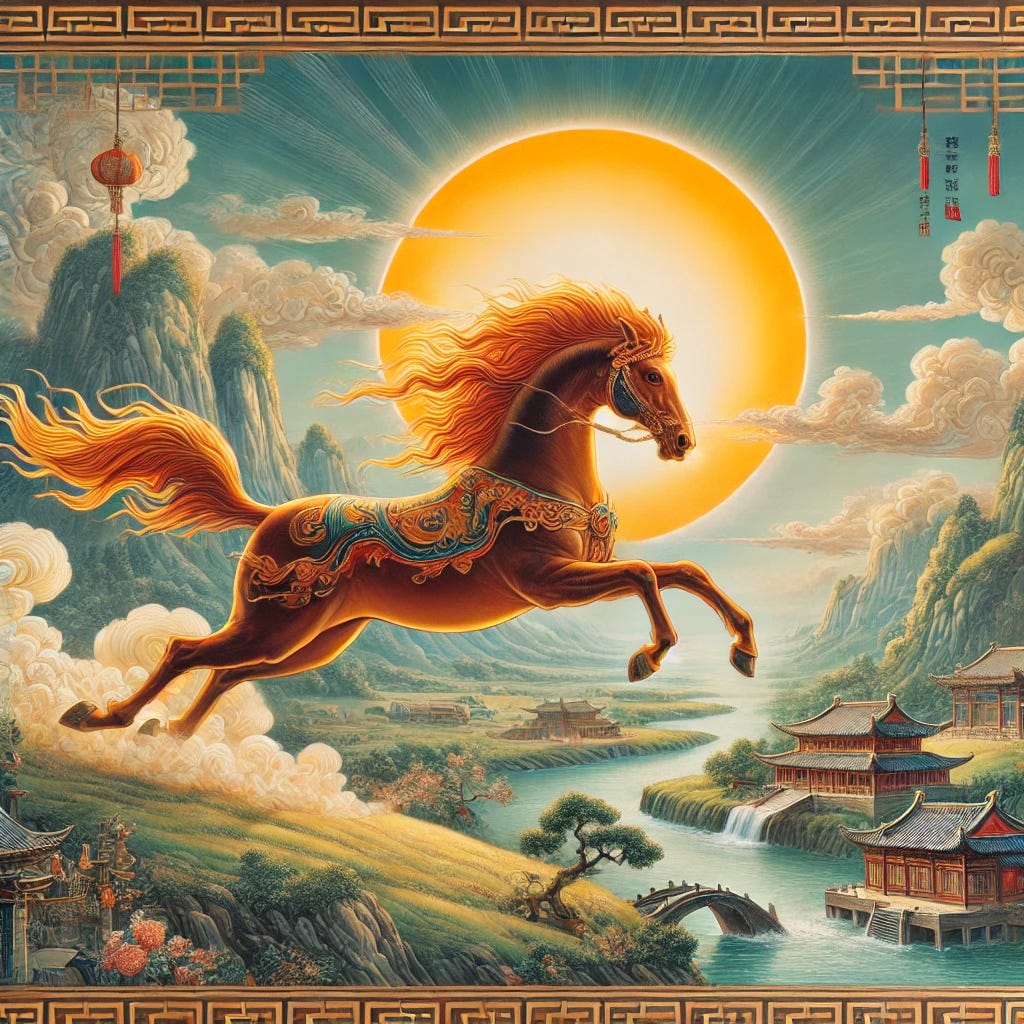
Horses have been an integral part of Chinese culture for thousands of years. The Mongols and Manchurians have been known as “马背上的民族” (mǎ bèi shàng de mín zú), or "peoples on horseback." In ancient times, horses were not only essential for transportation and agriculture but also played a crucial role in military campaigns, helping to establish and defend empires.
The phrase "马到成功" (mǎ dào chéng gōng) translates to "immediate success upon the arrival of the horse." This idiom reflects the importance of horses in achieving swift victories and symbolizes the speed and efficiency brought by these noble animals. The story behind this idiom is one of determination, strategy, and the pivotal role that horses have played in shaping Chinese history.
Chinese literature and folklore are rich with tales involving horses. From the legendary steeds of famous generals to the symbolic representations of strength and perseverance, horses have captured the imagination of the Chinese people. The phrase "马到成功" encapsulates the hope and expectation that success will follow swiftly and effortlessly, much like the arrival of a well-prepared cavalry.
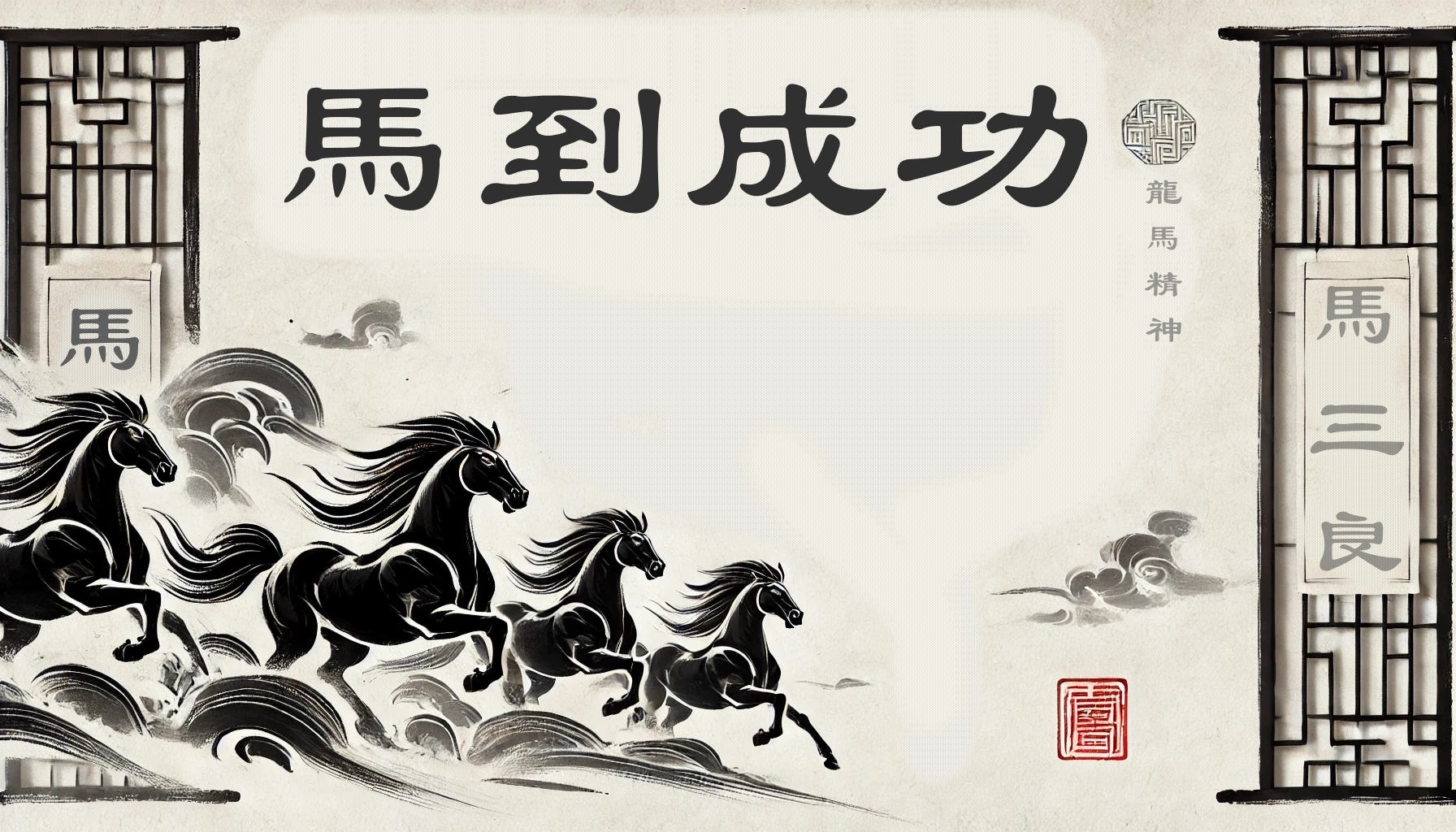
In this story, we explore the origins and significance of "马到成功" within the broader context of Chinese cultural and historical narratives. Through this lens, we gain insight into how horses have not only been practical assets but also powerful symbols of success, resilience, and triumph in Chinese tradition.
马到成功的故事
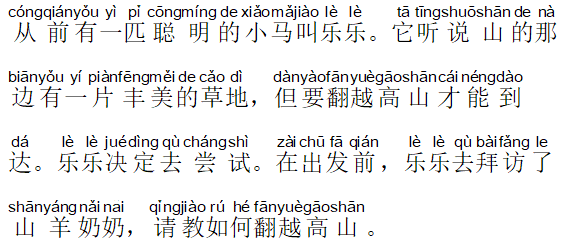
从前有一匹聪明的小马叫乐乐。它听说山的那边有一片丰美的草地,但要翻越高山才能到达。乐乐决定去尝试。在出发前,乐乐去拜访了山羊奶奶,请教如何翻越高山。
山羊奶奶微笑着说:“孩子,翻越高山需要勇气和智慧,我给你一些建议。遇到大雨时,要找到避雨的地方;过河时,要寻找浅滩;爬山时,一定要小心脚下的每一步。”乐乐牢记这些建议,带着满满的信心出发了。
一路上,乐乐遇到了大雨。它迅速躲进一个山洞,等雨停了才继续前行。接着,乐乐遇到了一条湍急的河流。它沿着河岸走,终于找到了一个浅滩,小心翼翼地趟过了河。再往前走,乐乐来到了陡峭的山坡。它一步一步向上爬,时而会停下来休息,确保每一步都踏实可靠。
经过漫长的旅程,乐乐终于到达了草地,它吃着鲜美的草,享受着成功的喜悦。这时,草地上的动物们围了过来,听乐乐讲述它的冒险故事。大家都对乐乐的勇气和智慧赞叹不已。
乐乐告诉自己和所有的动物朋友:“只要努力和坚持,不论遇到多大的困难,我们都一定会马到成功。”从那以后,乐乐成为了草原上的英雄,大家都敬佩它的勇气和毅力。
朋友们,你们也要像乐乐一样,相信自己,努力奋斗,不畏艰难,就一定能马到成功!
请注意:如果你是母语者,请通过Substack留言指出错别字或语法问题,以便保持帖子质量。
感谢合作!
Story breakdown by paragraph with vocabulary and audio
马 = a horse
到 = to arrive
成功 = success, to succeed
马到成功 (成语)= to achieve immediate success. Lit. success arrives with the horse (a famous Chinese idiom)
从前 = once, once upon a time
一匹 = (measure word for horses and similar animals)
聪明 = smart, intelligent
乐乐 = Happy Happy (the little horse’s name)
听说 = to hear it said, hear others say
山的那边 = on that side of the mountain, the other side of the mountain
一片 = (a measure word that gives the idea of a slice or strip of somthing)
丰美 = flourishing
草地 = prairie, grassland
但 = 但是;but
要 = to require, need
翻越 = to cross over, pass over
才能 = only then
到达 = to reach, arrive
决定 = to decide
尝试 = to give something a try, attempt
出发 = to depart, take off
拜访 = to visit, pay a visit
山羊奶奶 = grandma mountain goat, old lady mountain goat
请教 = to ask politely for someone’s advice
如何 = 怎么;how
Let’s take a closer look.
The English translation shows the characters followied by English, arranged by meaning.
从前 (once upon a time) 有 (there was) 一匹聪明的小马 (a small smart horse) 叫乐乐 (called LeLe)。它听说 (it had heard that) 山的那一边 (on the other side of the mountain) 有 (there is) 一片丰美的草地 (a strip of flourishing grassland), 但 (but) 要 (must) 翻越 (cross over) 高山 (high mountains) 才 (only then) 能 (can) 到达 (arrive)。乐乐决定 (LeLe decided) 去 (to go) 尝试 (try)。在出发前 (before taking off), 乐乐去拜访了 (LeLe went to visit) 山羊奶奶 (grandma mountain goat), 请教 (to ask for advice on) 如何 (how to) 翻越高山 (cross over the high mountains)。
微笑着 = smiling
需要 = requires, needs
勇气 = bravery
智慧 = wisdom
一些 = some, a few
建议 = suggestion(s)
遇到 = to encounter, happen onto
大雨 = hard rain, heavy rain
避雨的地方 = a place to take shelter from the rain
过河时 = when one crosses the river, fording the river
寻找 = to look for, seek
浅滩 = sandbar (lit. shallow beach)
爬 = to climb
脚下的每一步 = each step you take (lit. foot under each step)
牢记 = to set to memory, remember
带着 = bringing
满满 = full
信心 = confidence
一路上 = the whole way, on the way
迅速 = rapidly, quickly
躲进 = to duck into, to enter in, to dodge
山洞 = a mountain cave
继续 = to continue
前行 = to go forward, proceed on the way
接着 = following that, continuing on
沿着 = to follow along, go along
湍急 = rushing water
河流 = river
小心翼翼 (成语)= very careful, prudent
趟过 = to wade through, wade across
陡峭 = steep, precipitous
山坡 = a mountain slope
时而会 = would often
休息 = to rest
确保 = to ensure, guarantee
踏实可靠 = reliable, dependable
Let’s take a closer look.
The English translation shows the characters followed by English, arranged by meaning.
一路上 (the whole way), 乐乐遇到了 (LeLe encountered) 大雨 (heavy rains)。它迅速 (It hurridly) 躲进一个山洞 (ducked into a cave), 等雨停了 (waited until the rain stopped) 才 (only then) 继续 (continued) 前行 (to proceed on the way)。接着 (following that), 乐乐遇到了 (LeLe encountered) 一条湍急的河流 (a rushing river)。它沿着河岸走 (it walked along the river bank),终于 (finally) 找到了 (found) 一个浅滩 (a sandbar),小心翼翼地 (prudently) 趟过了河 (waded across the river)。再往前走 (continuing to walk on),乐乐来到了 (LeLe arrived at) 陡峭的山坡 (a precipitous slope)。它一步一步 (one step at a time, it) 向上爬 (crawled upward),时而会 (sometimes would) 停下来 (stop) 休息 (to rest),确保 (ensuring) 每一步都 (each step) 踏实可靠 (reliable)。
经过 = to experience, pass through
漫长 = slow and long
旅程 = journey
终于 = finally
达到 = to arrive, arrive at
鲜美 = flourishing, splendid
享受 = to enjoy, savor
成功的喜悦 = the happiness of success (lit. success’s happiness)
围过来 = to surround, gather around (过来 gives a sense of “come over” i.e., came over and gathered around him.)
讲述 = to tell (a story or narrative)
冒险 = to take risks, adventure
故事 = story
赞叹 = to praise, express admiriation
不已 = incessantly, without stop
告诉自己 = to tell oneself
坚持 = to persist
不论 = no matter
困难 = difficulty, challenge
从那以后 = after that
英雄 = hero
敬佩 = to admire, hold in high regard
勇气 = bravery
毅力 = determination
相信自己 = to believe in oneself
努力 = diligently
奋斗 = to strive
不畏 = to not be afraid of
艰难 = difficulties, hardships
Character Radical:
马 = the “horse” radical,马字旁 (sān diǎn shuǐ). 马 (shuǐ) means “horse.” It represents the horse, an animal deeply ingrained in Chinese culture, history, and daily life. This radical often appears in characters related to horses or attributes and actions connected to them.
Some examples are:
妈 (mā) - “mother” or “mom“
骑 (qí) - “to ride” (a horse, bike, etc.)
Example: 骑马 (qí mǎ) - To ride a horse
骄 (jiāo) - “proud, arrogant”
驴 (lǘ) - ”donkey”
Yin-yang Character Groups:
Yin-yang character groups consist of pairs where the meanings are opposite or contrast each other. Here are three pairs:
忘记 (wàng jì) - 记得 (jì de) = to forget - to remember
智慧 (zhì huì) - 愚昧 (yú mèi) = wisdom - ignorance
成功 (chéng gōng) - 失败 (shī bài) = success - failure
Thanks for reading Mapping Mandarin™! I love doing this and want to keep all posts free for everyone. Please consider pledging to help keep them free. A yearly pledge or even a month now and then would be a great help. 感谢!

Also, check out my other Substack: Heart Of China Journal!
And the Master Mandarin YouTube channel!
