
看电视——Watching TV - Intermediate
📺 A Little Story About Watching TV Together

In this delightful tale from a first-grade Chinese primer, we’re welcomed into the living room of a family whose nightly routine is full of small surprises. Everyone gathers to watch TV—but what they choose to watch (and how they react) tells us more about love, respect, and shared joy than any program on the screen.
From 京剧 (Peking opera) to soccer matches and soothing dance performances, each family member brings their own flavor to the evening. Sometimes they nap, sometimes they cheer, and sometimes they simply sit together in harmony. It’s a gentle reminder that “watching TV” is never just about the screen—it’s about the people sitting beside you.
This story is written simply and clearly, making it a perfect entry point for learners of all levels. Read it aloud, imagine the scenes, and maybe even reflect on the quiet stories unfolding in your own living room.
📌 Note for Learners:
If you’re new to reading Chinese, don’t worry! The version below is in full Chinese characters.
✨ Just scroll down to find the instructor version—with pinyin, vocabulary, and audio to guide you step by step.
看电视
每天,我们全家人都看电视,我家看电视,真有些奇妙——
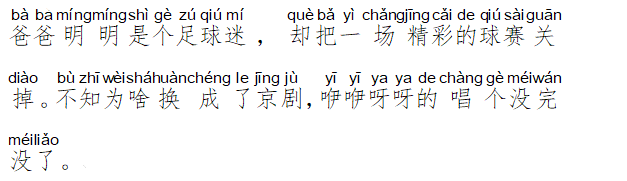
爸爸明明是个足球迷,却把一场精彩的球赛关掉。不知为啥换成了京剧,咿咿呀呀的唱个没完没了。
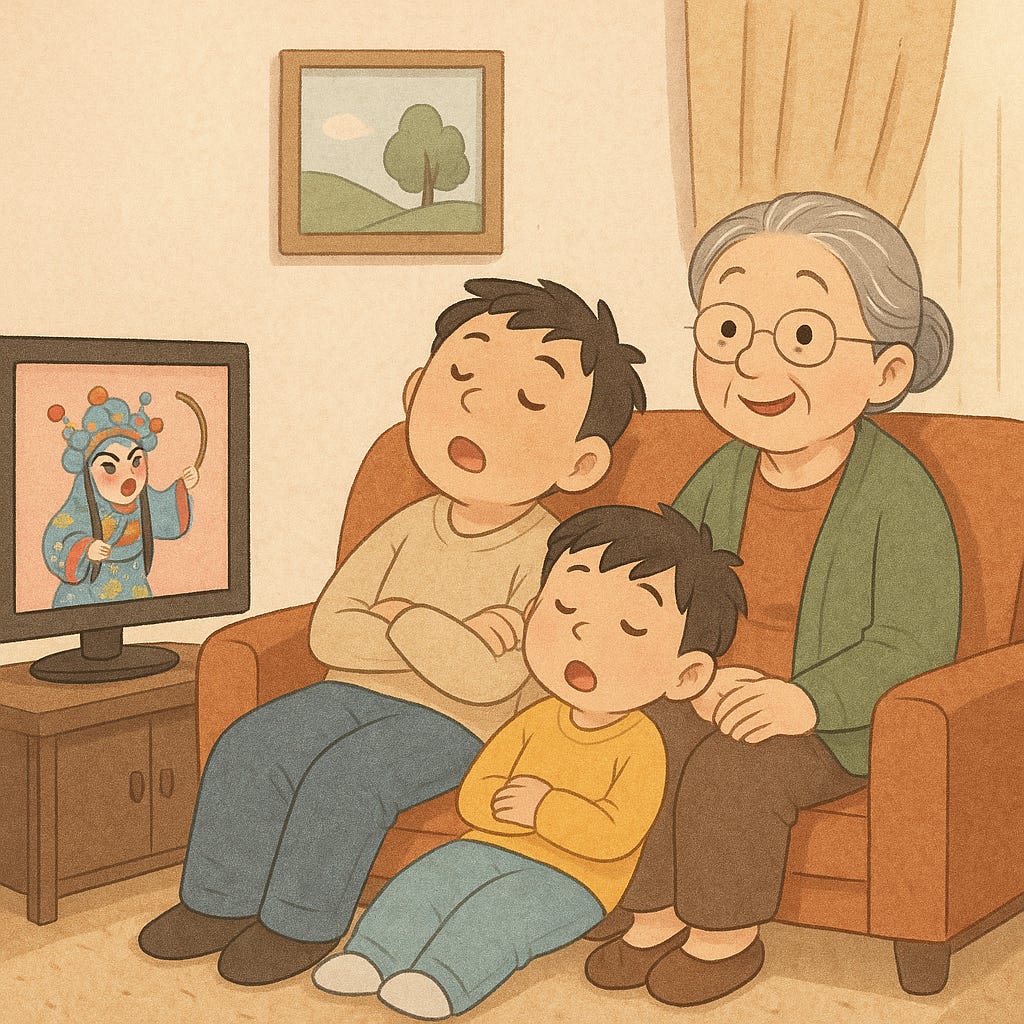
只有奶奶听得入了迷,我和爸爸都在打盹睡觉。奶奶啥时换了频道?
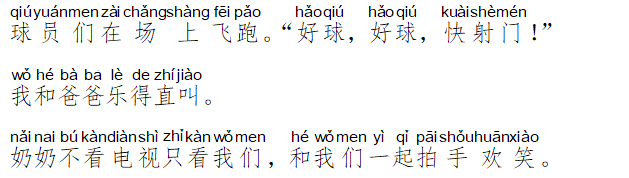
球员们在场上飞跑。“好球,好球,快射门!” 我和爸爸乐得直叫。
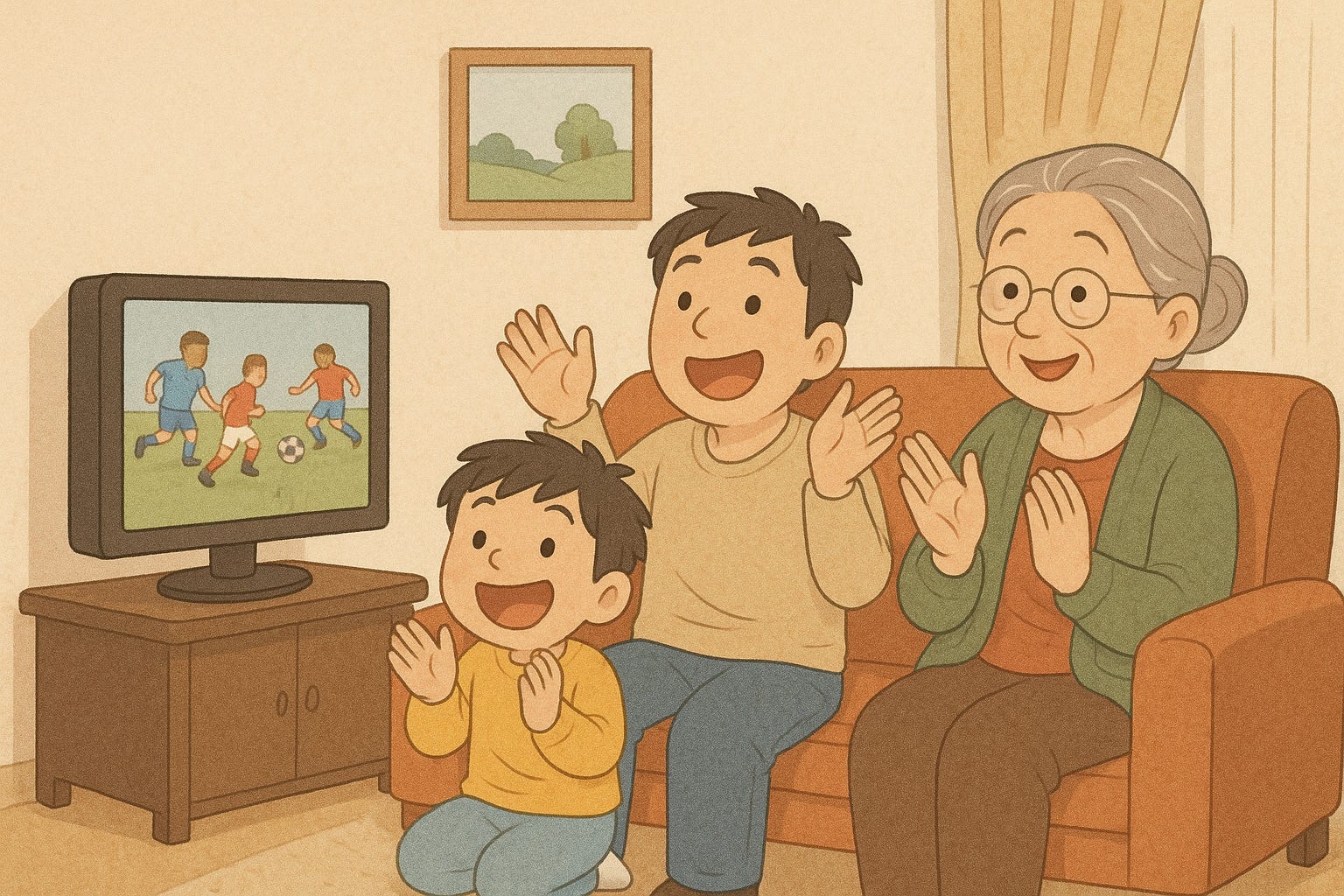
奶奶不看电视只看我们,和我们一起拍手欢笑。
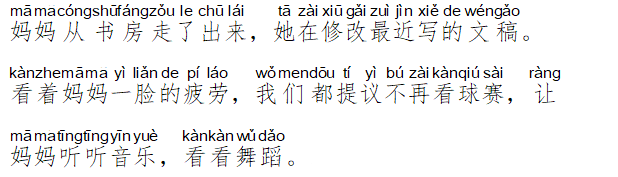
妈妈从书房走了出来,她在修改最近写的文稿。看着妈妈一脸的疲劳,我们都提议不再看球赛,让妈妈听听音乐,看看舞蹈。
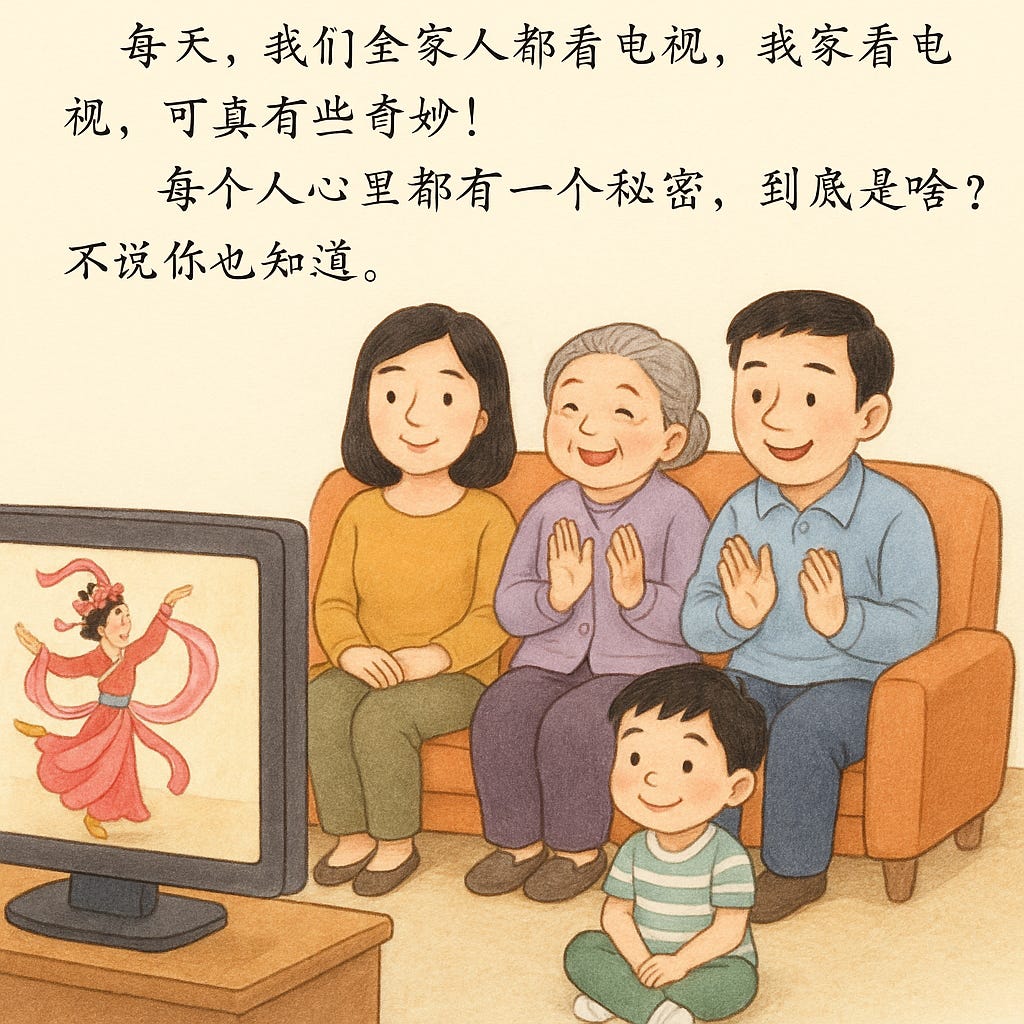
每天,我们全家人都看电视,我家看电视,可真有些奇妙!
每个人心里都有一个秘密,到底是啥?不说你也知道。
Download the PDF file HERE.
These PDFs are designed to help you immerse yourself fully in the language, focusing on reading and comprehension without Pinyin or vocabulary lists. And they include both simplified and traditional character versions. You can download, print them out, and use them for study and review at your own pace.
📖本故事来自《语文一年级 下册》,义务教育课程标准实验教科书。
This story is from the Grade One Chinese Language Primer Vol. 2.
Need extra help with sentence structure, vocabulary, or breaking things down?
🎯 Try the new AI tool we just released — MandarinMap GPT — your companion for mastering Mandarin one step at a time.
👉 Try MandarinMap GPT
🔗 Powered by the Mapping Mandarin™ method — real stories, real audio, real understanding.
看 (kàn) – to watch, to look
电视 (diàn shì) – television

每天 (měi tiān) – every day
全家人 (quán jiā rén) – the whole family
都 (dōu) – all, both
我家 (wǒ jiā) – my family, my home
真 (zhēn) – really, truly
有些 (yǒu xiē) – somewhat, a little
奇妙 (qí miào) – wonderful, curious, magical
爸爸 (bà ba) – dad
明明 (míng míng) – clearly, obviously
是 (shì) – to be
个 (gè) – (measure word)
足球迷 (zú qiú mí) – soccer fan
却 (què) – but, yet
一场 (yì chǎng) – one (measure word for shows, matches)
精彩 (jīng cǎi) – wonderful, brilliant
球赛 (qiú sài) – ball game, soccer match
关掉 (guān diào) – to turn off
不知 (bù zhī) – not know, don’t know
为啥 (wèi shá) – why (colloquial)
换成 (huàn chéng) – to switch to
京剧 (jīng jù) – Peking opera
咿咿呀呀 (yī yī yā yā) – onomatopoeia for Peking opera singing
唱 (chàng) – to sing
没完没了 (gè méi wán méi liǎo) – endlessly, without stopping唱个没完没了 (chàng gè méi wán méi liǎo) - to sing endlessly
Let’s take a closer look.
The translation shows the characters followed by English, arranged by meaning.
爸爸 (Dad) 明明 (clearly) 是 (is) 个 (a) 足球迷 (soccer fan),却 (yet) 把一场精彩的球赛关掉 (turned off an exciting soccer match)。不知为啥 (Don’t know why) 换成了 (changed it to) 京剧 (Peking Opera),咿咿呀呀的 (onomatopoeia for Peking Opera sounds) 唱个没完没了 (singing non-stop)。

只有 (zhǐ yǒu) – only
奶奶 (nǎi nai) – grandmother (father’s side)
听得入了迷 (tīng de rù le mí) – to be absorbed in listening
和 (hé) – and
都 (dōu) – all, both
在 (zài) – in the process of (indicates ongoing action)
打盹 (dǎ dǔn) – to doze off
睡觉 (shuì jiào) – to sleep
啥时 (shá shí) – when (colloquial)
换了 (huàn le) – changed
频道 (pín dào) – channel (TV, radio, etc.)
球员们 (qiú yuán men) – players
场上 (chǎng shàng) – on the field
飞跑 (fēi pǎo) – to dash, to run quickly
好球 (hǎo qiú) – good shot! (Lit. good ball)
快 (kuài) – quickly
射门 (shè mén) – to shoot (the goal)
乐得 (lè de) – so happy that...
直叫 (zhí jiào) – to keep shouting, to shout out
拍手 (pāi shǒu) – to clap hands
欢笑 (huān xiào) – to laugh with joy
书房 (shū fáng) – study room, office
走了出来 (zǒu le chū lái) – came walking out, walked out
修改 (xiū gǎi) – to revise, to edit
最近 (zuì jìn) – recently
写的 (xiě de) – written
文稿 (wén gǎo) – manuscript, draft
看着 (kàn zhe) – looking at
一脸的 (yì liǎn de) – (an expression) full of...
疲劳 (pí láo) – tiredness, fatigue
提议 (tí yì) – to suggest
不再 (bú zài) – no longer
音乐 (yīn yuè) – music
舞蹈 (wǔ dǎo) – dance
Let’s take a closer look.
The translation shows the characters followed by English, arranged by meaning.
妈妈 (Mom) 从书房走了出来 (came walking out of the study),她 (she) 在修改 (was revising) 最近写的文稿 (a recently written draft)。看着妈妈 (Looking at mom) 一脸的疲劳 (who looked exausted),我们都提议 (we all suggest) 不再看球赛 (not watching the soccer match anylonger),让妈妈 (so mom could) 听听音乐 (listen to music),看看舞蹈 (and watch dance)。

可 (kě) – (used for emphasis) really, indeed

每个人 (měi gè rén) – everyone
心里 (xīn lǐ) – in the heart, inside
都有 (dōu yǒu) – all have
秘密 (mì mì) – secret
到底 (dào dǐ) – in the end, after all
是啥 (shì shá) – what is it (colloquial)
不说 (bù shuō) – not say
你也知道 (nǐ yě zhī dào) – you know it too
Q&A 问答
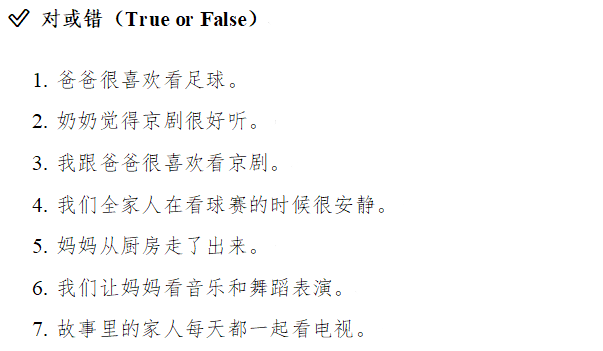
觉得 (jué de) – to feel, to think
好听 (hǎo tīng) – nice sounding, pleasant to listen to
时候 (shí hòu) – time, moment
安静 (ān jìng) – quiet
厨房 (chú fáng) – kitchen
表演 (biǎo yǎn) – performance
故事 (gù shì) – story
一起 (yì qǐ) – together
答案 Answer key:
1. ✅ (对) 2. ✅ (对) 3. ❌ (错) 4. ❌ (错) 5. ❌ (错) 6. ✅ (对) 7. ✅ (对)
Thanks for reading Mapping Mandarin™! I pour a lot of heart into these posts and love making them freely available to everyone. If you enjoy what I’m creating, please consider becoming a supporter to help keep it open and accessible—especially for those who might not otherwise afford it.
Even a yearly pledge, or just a month here and there, makes a real difference.
感谢你的支持!💛

Also, check out my other Substack: Heart Of China Journal!
And the Master Mandarin YouTube channel!
