

The Little Turtle 小乌龟 - Beginner
The story is suitable for upper-beginner to early-intermediate

In this delightful short story, we meet a playful little turtle who’s both curious and comical. The narrator describes their pet turtle with vivid comparisons and observations, highlighting the creature’s armored charm, slow pace, and determined—yet clumsy—attempts at escape. It’s a gentle, affectionate tribute to the quiet joy of animal companionship, told with humor and childlike wonder.
📌 Note for Learners:
If you’re new to reading Chinese, don’t worry! The version below is in full Chinese characters.
✨ Just scroll down to find the instructor version—with pinyin, vocabulary, and audio to guide you step by step.
小乌龟
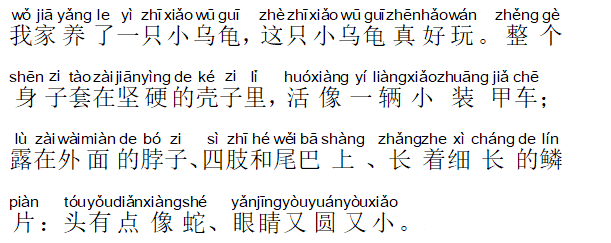
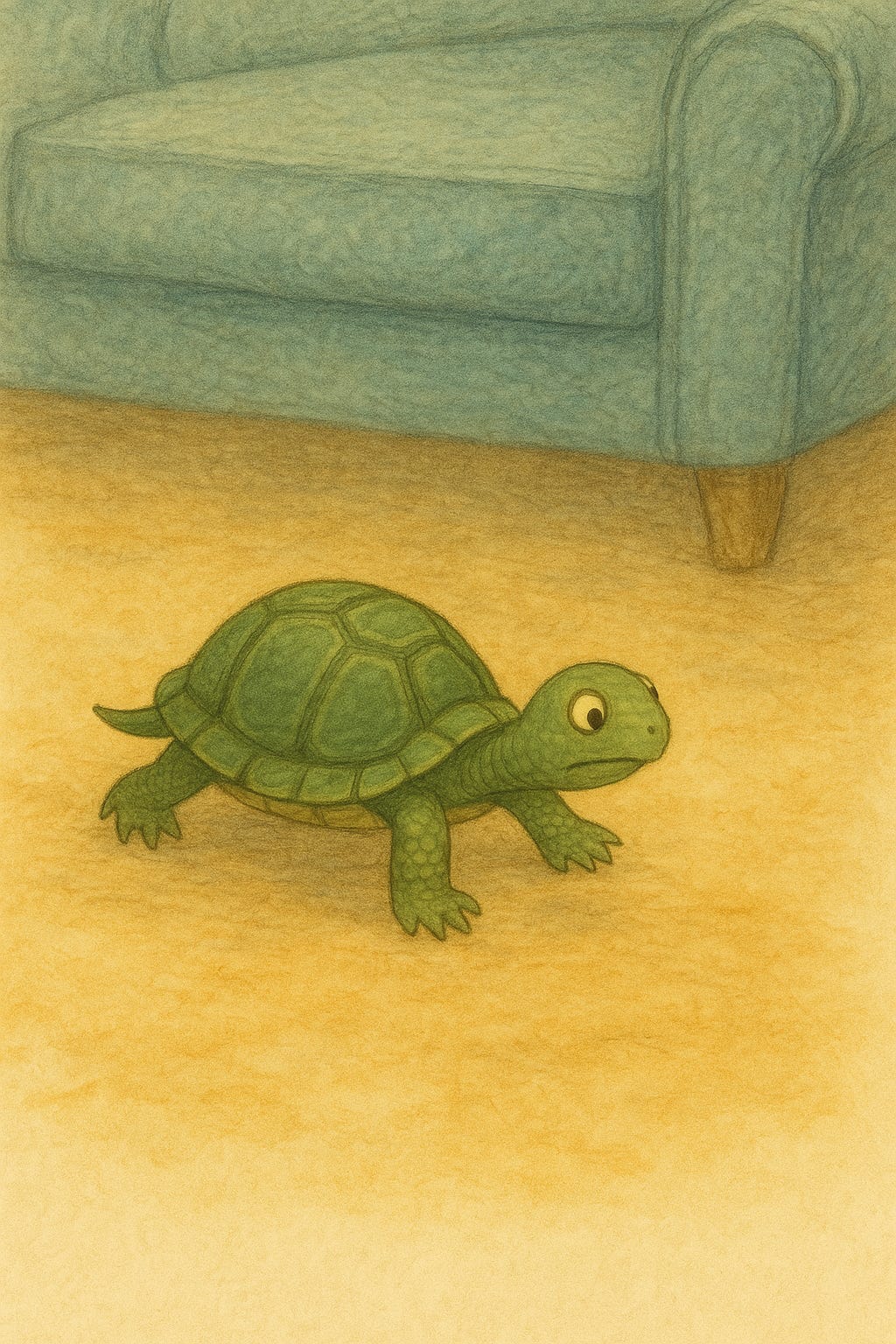
我家养了一只小乌龟,这只小乌龟真好玩。整个身子套在坚硬的壳子里,活像一辆小装甲车;露在外面的脖子、四肢和尾巴上、长着细长的鳞片:头有点像蛇、眼睛又圆又小。
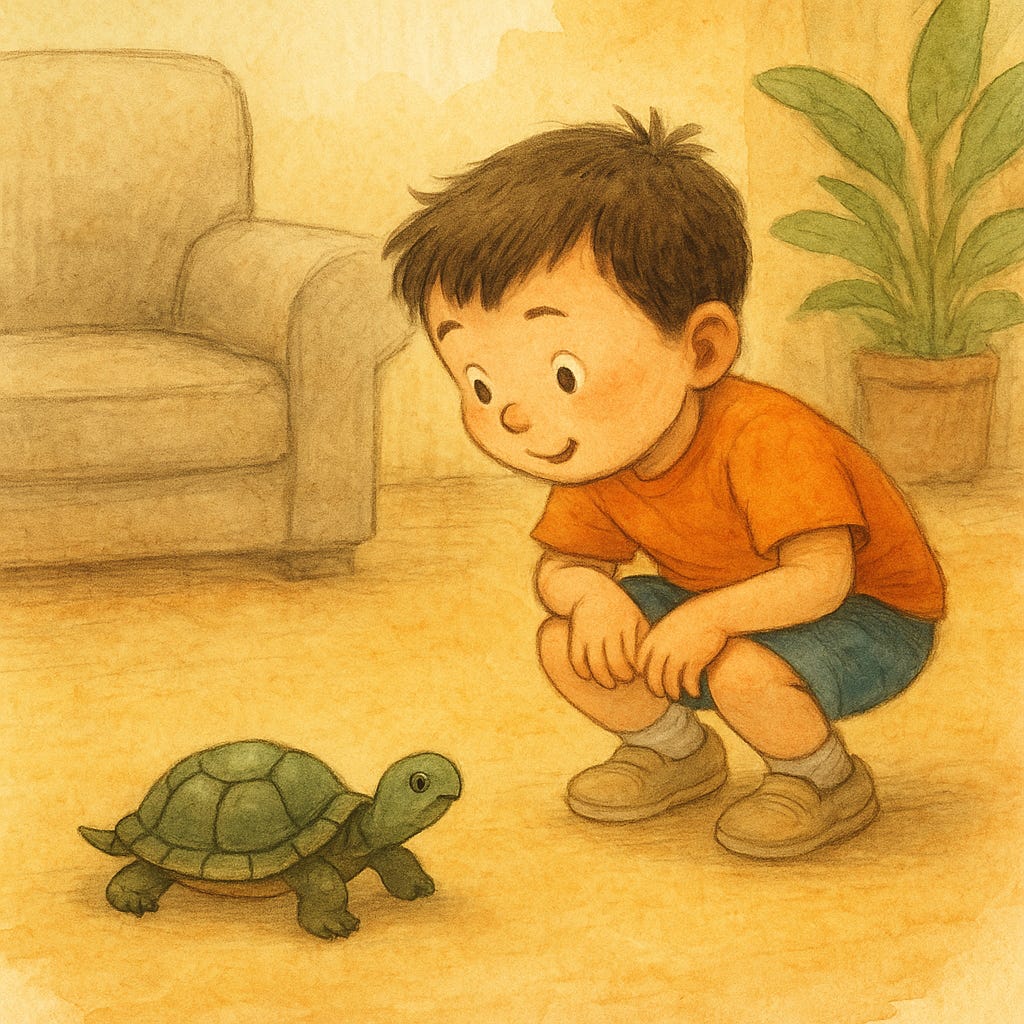
小乌龟前进的速度很慢。我把它放在地上,它先向四周看看,便慢慢腾腾地向沙发底下爬去。我算了一下,它每分钟爬不到两米远,真够慢的了。
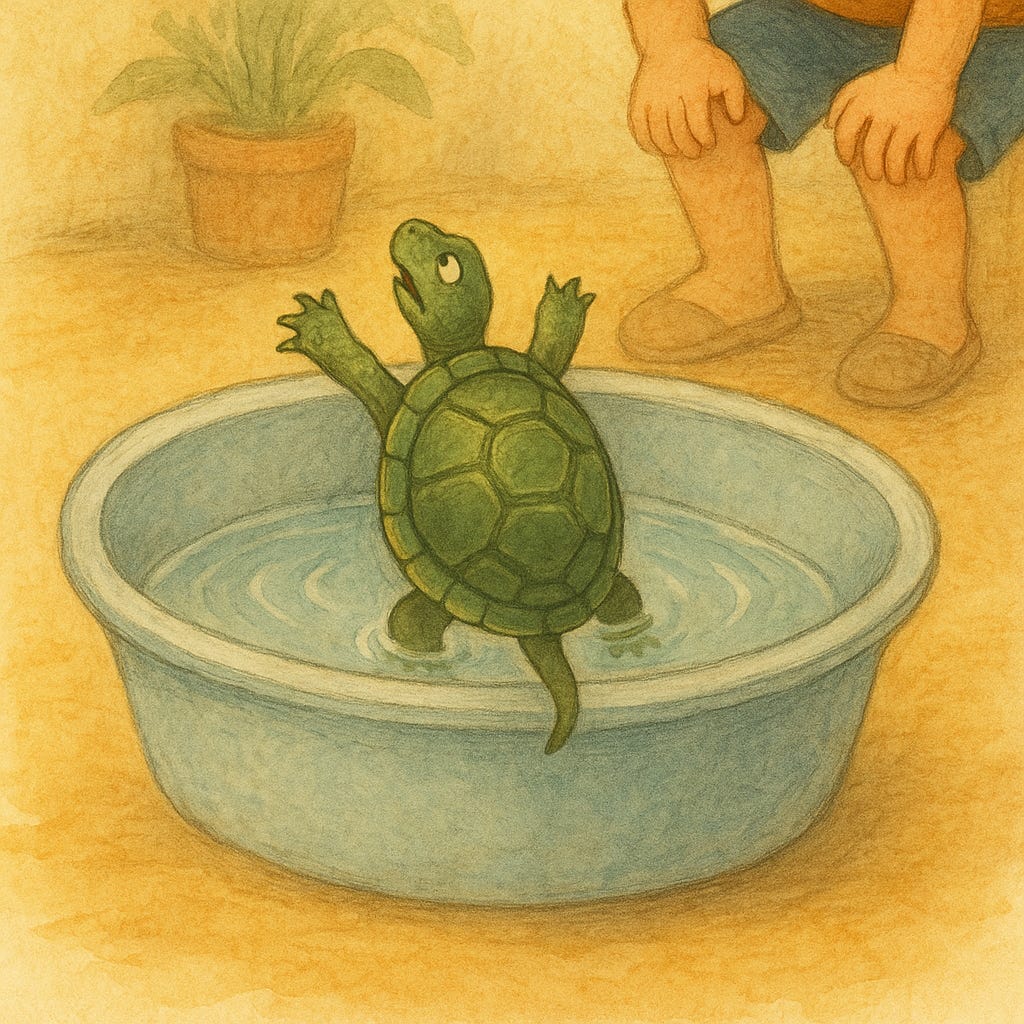
有一次,我想看看它是不是能爬出盆子。我把它放在一个盛了一半水的盆子里。它把头伸出水面,沿着盆的周围使劲地摆动着四只爪子。看样子它是想逃出来,可是它跌跌撞撞怎么也逃不出来。那着急的傻样子逗得我哈哈大笑。
小乌龟真好玩,它已经成了我的好朋友。
Download the PDF file HERE.
These PDFs are designed to help you immerse yourself fully in the language, focusing on reading and comprehension without Pinyin or vocabulary lists. And they include both simplified and traditional character versions. You can download, print them out, and use them for study and review at your own pace.
📖本故事改编自《口语交际》,选自“同步作业,二年级下”鲁教版。
This story is adapted from Oral Communication, selected from “Synchronized Homework, Grade 2 – Second Semester” (Lü Jiao Edition).
Need extra help with sentence structure, vocabulary, or breaking things down?
🎯 Try the new AI tool we just released — MandarinMap GPT — your companion for mastering Mandarin one step at a time.
👉 Try MandarinMap GPT
🔗 Powered by the Mapping Mandarin™ method — real stories, real audio, real understanding.
乌龟 (wū guī) – turtle
养 (yǎng) – to raise (animals), to keep
好玩 (hǎo wán) – fun, amusing
整个 (zhěng gè) – whole, entire
身子 (shēn zi) – body (colloquial)
套 (tào) – to cover, to wrap
坚硬 (jiān yìng) – hard, solid
壳子 (ké zi) – shell
活像 (huó xiàng) – just like, vividly resembles
装甲车 (zhuāng jiǎ chē) – armored vehicle
露 (lù) – to expose, to show
脖子 (bó zi) – neck
四肢 (sì zhī) – four limbs
尾巴 (wěi ba) – tail
鳞片 (lín piàn) – scales (of a fish/reptile)
细长 (xì cháng) – thin and long
蛇 (shé) – snake
圆 (yuán) – round
又…又… (yòu… yòu…) – both…and… (used for two adjectives)
前进 (qián jìn) – to move forward
速度 (sù dù) – speed
地上 (dì shàng) – on the ground
四周 (sì zhōu) – all around, surroundings
看看 (kàn kan) – to take a look
便 (biàn) – then, and so (formal/literary)
慢慢腾腾 (màn màn téng téng) – slowly and leisurely (colloquial)
底下 (dǐ xia) – underneath, below
爬 (pá) – to crawl, to climb
算 (suàn) – to calculate, to count
每分钟 (měi fēn zhōng) – per minute
不到 (bú dào) – less than, not reach
够…的了 (gòu… de le) – quite…, really… (used for emphasis)

有一次 (yǒu yí cì) – once, one time
是不是 (shì bu shì) – whether or not
爬出 (pá chū) – to crawl out
盆子 (pén zi) – basin, tub
盛 (chéng) – to contain, to hold (used with liquids or food)
一半 (yí bàn) – half
水面 (shuǐ miàn) – surface of the water
沿着 (yán zhe) – along (a direction or edge)
周围 (zhōu wéi) – surroundings, around
使劲地 (shǐ jìn de) – with effort, vigorously
摆动 (bǎi dòng) – to swing, to wave
爪子 (zhuǎ zi) – paw, claw
看样子 (kàn yàng zi) – it seems, it looks like
逃出来 (táo chū lái) – to escape out
跌跌撞撞 (diē diē zhuàng zhuàng) – stumbling, unsteady
着急 (zháo jí) – anxious, worried
傻样子 (shǎ yàng zi) – silly appearance
逗 (dòu) – to amuse, to tease
哈哈大笑 (hā hā dà xiào) – to burst into laughter

已经 (yǐ jīng) – already
成了 (chéng le) – has become
朋友 (péng you) – friend
Q&A 问答
长得 (zhǎng de) – to look like, to appear
像 (xiàng) – like, resemble
特别 (tè bié) – special
速度 (sù dù) – speed (see section 2)
作者 (zuò zhě) – author
为什么 (wèi shén me) – why
成功 (chéng gōng) – to succeed
逃出来 (táo chū lái) – to escape (see section 3)
感受 (gǎn shòu) – feeling, experience
之间 (zhī jiān) – between
建立 (jiàn lì) – to establish, to build
关系 (guān xì) – relationship
Thanks for reading Mapping Mandarin™! I pour a lot of heart into these posts and love making them freely available to everyone. If you enjoy what I’m creating, please consider becoming a supporter to help keep it open and accessible—especially for those who might not otherwise afford it.
Even a yearly pledge, or just a month here and there, makes a real difference.
感谢你的支持!💛

Also, check out my other Substack: Heart Of China Journal!
And the Master Mandarin YouTube channel!

"他先向四周看看"
I understand this means "He looked all around". But what does 先向 mean in this sentence?
"露在外面的脖子"
What is the meaning of this sentence?